
Chinese Garlic Container Loading Supervision in China
An approved garlic lot can still become a problem during the final stage before shipment.
The wrong cartons can be loaded, batches can be mixed, packaging can be damaged during handling, quantities can differ from the packing list, or the container itself can create avoidable risk. Once the doors are closed and the shipment leaves China, correcting these problems becomes much harder.
I provide on-site container loading supervision for Chinese garlic shipments to give European importers an independent record of what was actually loaded, how it was loaded, and what condition the shipment was in before the container was sealed.
On the projects I manage, container loading is treated as a separate control point, not simply the final logistics step.
Why inspect the loading if the garlic has already passed quality inspection?
A pre-shipment quality inspection and container loading supervision answer two different questions.
Quality inspection asks:
- Does the garlic meet the agreed specification?
Loading supervision asks:
- Is the approved cargo actually being loaded correctly into the correct container?
A shipment can pass inspection earlier in the day and still develop problems during loading. Cartons may be moved between areas, batches may become mixed, damaged packaging may be loaded, quantities may change, or loading may be rushed.
This is why I separate product approval from final loading control. For finished product and batch checks before loading, see my Chinese Garlic Quality Inspection service.
What I check before the container is loaded
Before loading starts, I establish a clear reference point for the shipment.
The exact scope depends on the order, but the basic checks normally include:
Container identification
The container number is recorded and photographed so the evidence can be connected to the correct shipment.
Container condition
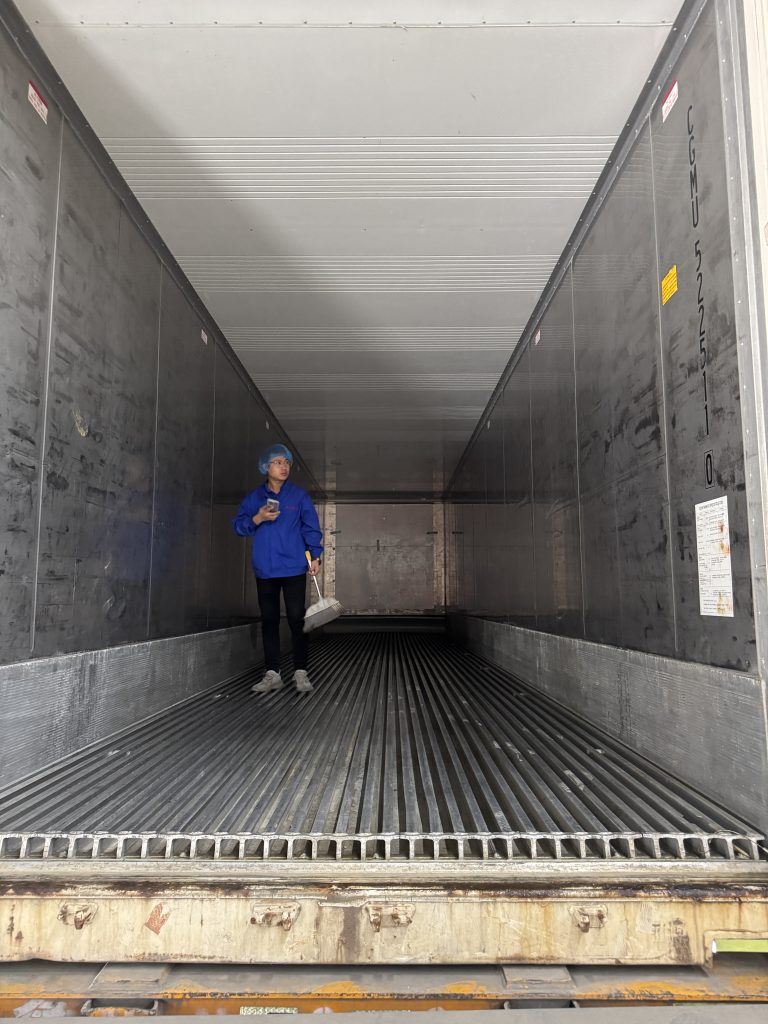
The empty container is visually checked for obvious cleanliness problems, unusual smell, visible damage, floor condition and signs of moisture that could affect the cargo.
Cargo identity
Carton markings, product type, garlic size, packaging and relevant batch or lot information are compared with the agreed shipment.
Packing list reference
The expected carton, pallet or unit quantity is confirmed before loading begins.
Special loading instructions
Any agreed rules concerning batch separation, pallet arrangement, protection, temperature logger placement or other shipment-specific requirements are clarified before the first goods enter the container.
Packaging, carton markings and traceability should already have been aligned before this stage. Where this requires separate control, see Packaging and Traceability for Chinese Garlic.
What I check during loading?
I check loading across 9 categories. Each category has clear pass fail expectations.
- Container condition before loading
- Cleanliness, smell, visible damage
- Floor condition and dryness
- Basic suitability for cargo - Correct goods and batch control
- Carton and pallet identity checks
- Avoiding mixed batches and wrong SKUs
- Alignment with packing list - Pallet quality and stability
- Pallet condition and integrity
- Stability for transport and handling
- Stretch wrap and protection where needed - Stacking and weight distribution
- Safe stacking pattern
- Avoiding crushing risk
- Reasonable weight distribution and stability - Carton protection and damage prevention
- Carton integrity during handling
- Corner protection where relevant
- Handling discipline notes - Moisture and ventilation risk control
- Basic moisture risk awareness
- Avoiding obvious wet loading conditions
- Notes on ventilation practices where applicable - Count and loading progress tracking
- Loaded quantity tracking against packing list
- Photo evidence during progress
- Final count confirmation logic - Sealing and key identifiers
- Container seal applied and recorded
- Seal number photo and confirmation
- Basic shipment identifiers captured - Photo evidence and loading report
- Key photos: container condition, pallets, loading steps, seal
- Short checklist style report
- Clear summary: proceed or hold if critical issues appear
Problems that should be corrected before the container doors close
The main advantage of being present during loading is not producing a report afterwards. It is having the opportunity to correct a problem while correction is still possible.
Depending on the agreed control plan, I raise issues immediately when I see situations such as:
- Wrong product or carton being loaded
- Unexpected mixing of batches or lots
- Visible carton damage
- Wet or unsuitable loading conditions
- Quantity differences
- Unstable or damaging stacking
- Missing agreed shipment identifiers
- Incorrect or missing special loading requirements
If an issue is significant, I document it and recommend correction or holding the affected part of the loading until the situation is clarified.
The final commercial release decision remains with the buyer and the responsible shipment parties.
Container sealing and final shipment evidence
The final minutes of loading are important because this is where the physical cargo is connected to the shipping record.
Before completing the supervision, I document the relevant final identifiers.
These normally include:
- Final loaded condition
- Container number
- Seal application
- Seal number
- Seal photograph
- Final loading photographs
- Relevant quantity notes
- Outstanding exceptions or corrections
The objective is simple. If somebody later asks what was loaded into the container in China, there should be a structured evidence trail instead of relying only on memory or supplier statements.
The physical shipment information should also remain consistent with the commercial and export paperwork. For checks before dispatch, see EU Import Document Checks for Chinese Garlic.
What you receive after loading ?
You receive a compact evidence package designed for practical commercial use.
Depending on the agreed scope, this includes:
- Container loading checklist
- Container condition photographs
- Loading progress photographs
- Cargo and carton identification evidence
- Quantity or loading progress notes
- Photographs of identified problems and corrections
- Container number
- Seal number and seal photograph
- Final loading summary
- Outstanding risk notes, if any
The report is designed to answer the questions that normally appear when there is a disagreement after arrival:
- Was this the correct cargo?
- Was the packaging already damaged?
- Was the quantity correct at loading?
- Was the shipment loaded according to the agreed plan?
- Which container and seal were used?
- What evidence exists from China?
Container loading is the last link in a longer control process
Loading supervision works best when it is connected to the earlier shipment controls.
Before loading, the finished garlic should already have been checked against the agreed product specification through Chinese Garlic Quality Inspection.
Packaging, carton information and shipment traceability should already match the approved requirements through Packaging and Traceability for Chinese Garlic.
Commercial and export documents should also be checked before dispatch so physical cargo information and shipment paperwork remain consistent. This is covered through EU Import Document Checks for Chinese Garlic.
The strongest process therefore connects supplier screening, product specification, quality inspection, packaging and traceability, document checks, and final container loading supervision.
Each stage answers a different question, and the evidence from one stage supports the next. You can see how these controls fit together in the complete Chinese garlic sourcing process.
Why supplier control starts before the loading date?
Container loading supervision reduces shipment risk, but it cannot compensate for choosing the wrong supplier in the first place.
A supplier with weak quality discipline, inconsistent documentation or poor communication can create problems long before the container arrives.
For this reason, I normally treat supplier selection, production control and final loading as connected decision points rather than isolated services.
If you are still evaluating the Chinese supplier before placing an order, paying a deposit or committing to a shipment, see Supplier Due Diligence for Chinese Garlic Suppliers.
What makes independent loading supervision useful?
The supplier naturally knows its own warehouse, workers and loading process better than the buyer does. But the supplier is also the party preparing the shipment.
My role is different. I work from the European buyer’s agreed specification and loading instructions and document what happens locally in China. This creates an independent information layer between the buyer sitting in Europe and the physical cargo leaving China.
The benefit is not only finding problems. It is reducing uncertainty and creating evidence while there is still time to act.
Frequently Asked Questions
Does container loading supervision replace quality inspection?
No. Chinese Garlic Quality Inspection checks whether the garlic and packaging meet the agreed specification. Container loading supervision checks what happens when the approved shipment is placed into the container.
For controlled shipments, the two stages complement each other.
Do you check reefer settings or temperature loggers?
If these items are part of the agreed shipment control plan, I can document visible container settings, logger placement and related evidence during loading.
The required transport parameters should be agreed before loading begins.
Can you stop the loading if there is a problem?
I can identify the problem, document it, request immediate correction and recommend that the affected loading step is held until clarification.
Final authority remains with the buyer and the responsible shipment parties.
Do I receive photographs of the loading?
Yes. Photo documentation is one of the main outputs of the service.
The evidence normally covers the container before loading, cargo identification, loading progress, relevant problems or corrections, the completed load and the seal.
Can you verify the loaded quantity?
I track the loading quantity against the agreed packing list or loading plan within the agreed inspection scope.
If a difference appears, it can be investigated before the container leaves.
Do you check the container before loading?
Yes. The empty container is visually checked for relevant obvious problems such as cleanliness, visible damage, floor condition, unusual smell and moisture risk before loading begins.
When should loading supervision be arranged?
Ideally before the loading date is finalized.
Send the packing list, product specification, loading location, expected loading date and any special loading instructions in advance so the control points can be agreed before the container arrives.
Want independent evidence of what actually leaves China?
Send me your garlic specification, packing list, loading location and planned shipment date. I will define the loading checkpoints and evidence requirements before the container arrives, then supervise the agreed controls on the ground in China.